All Categories
Featured
China's growing existence in the cloud computing sector has raised concerns among states and organizations, particularly around data security, privacy breaches, unapproved access to details, and the transfer of information to external partiesespecially the Chinese federal government. Another concern is that data collected by means of Chinese cloud technologies could be exploited for functions beyond its initial intentsuch as user surveillance or commercial and security espionage. The Chinese business Alibaba Cloud ranks fourth with 4% of the international market.
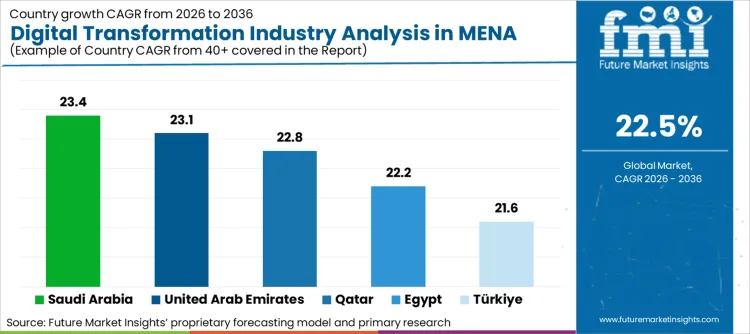
Beyond the Hype: Practical Gen AI Use Cases for GCC FirmsIn Saudi Arabia and the United Arab Emirates, both US and Chinese cloud providers are active, however the United States keeps a more prominent existence, with 12 cloud areas in Saudi Arabia and nine in the UAE. In comparison, in May 2024, Huawei Cloud introduced its first cloud area in Egypt and North Africa with a five-year financial investment of $300 million., Chinese cloud service providers have a limited presence, primarily catering to private business seeking cost-effective prices or those working in Asian markets.
China's increase in the Middle East's cloud market, through investments in digital facilities and regional collaborations, adds another layer of tension to the continuous competitors with the United States. This competition is not simply restricted to technological elements; it shows a broader struggle to form geopolitical spheres of influence, with the Middle East becoming a crucial strategic arena.
Role of AI in 2026 Business Growth
Second, China's technological expansionespecially in Egypt, the United Arab Emirates, and Saudi Arabiademands tactical and diplomatic attention from Israel, as these are locations of direct geopolitical and security significance for the nation. Third, while there is awareness in Israel about data security and the dangers of foreign technological impact, the risks connected with Chinese cloud infrastructureeven in relatively neutral fields like smart vehiclesare not totally acknowledged.
These vehicles are equipped with wise systems that gather real-time datasuch as place, car movement, and system efficiency. This information is transmitted through cloud facilities and might be saved on servers in China or managed by Chinese firms, raising issues about the possible use of such information for espionage, intelligence gathering, and even remote control.

Offered the repeating reports and concerns about Chinese companies violating data privacy and security, the use of Chinese-made lorries in Israelparticularly within federal government and defense institutionsshould be carefully assessed. This includes evaluating potential national security risks and thinking about more secure alternatives for use in delicate environments. Because of the challenges China presents in the technological and geopolitical arenas, it is crucial that Israel thoroughly evaluate the long-lasting implications of China's growing role as a local technological power.

Latest Posts
Recent GCC Tech Innovation Trends
The Best Workflow Tools Analyses in 2026
New Venture Updates From the GCC Startup Sector