All Categories
Featured
Table of Contents
In this design, generative AI functions as a thinking layer, not an authority. What separates these systems from earlier automation is their ability to reason over time.
In consumer operations, generative AI might examine support tickets, usage data, and churn signs to suggest intervention techniques. If a suggested action doesn't produce the wanted result, the system revises its approach. It intensifies problems, changes messaging, or sets off retention workflows, all while logging decisions for evaluation. This method mirrors how knowledgeable teams operate, however at a scale that manual processes can't match.
The most reliable systems conceal intricacy behind familiar user interfaces, enabling groups to gain from AI without learning new interaction designs. Within procurement or supply chain software, generative AI can continuously examine supplier performance, agreement terms, and need projections. When conditions change, it proposes alternative sourcing techniques, drafts validations aligned with policy, and paths decisions to the suitable approvers.
Another shift underway is the move from rule-based customization to generative systems that adjust dynamically. Rather of pre-defining every circumstance, groups specify goals and restrictions, and allow AI to customize actions appropriately. In digital product environments, generative AI can change onboarding circulations, feature exposure, or support interventions based upon user behavior, while respecting compliance standards.
Building the Impactful AI Strategy for 2026This balance between versatility and control is what makes generative AI practical at scale. Curious which tools are powering artificial information generation today? Explore our 10 Gen AI Tools to Develop Synthetic Data guide. For years, software advancement has been defined by a familiar split: people style systems and write code; tools assist at the margins.
Essential Steps for Developing AI Frameworks
By 2026, that boundary will fade away. AI is moving beyond line-by-line assistance and into system-level understanding. This is where it can reason across whole repositories, development histories, and deployment environments. The result is a shift from AI as a coding aid to AI as an individual in the software application lifecycle.
Modern codebases are sprawling, interconnected systems shaped by years of choices, tradeoffs, and patches. Navigating that context has actually always been among the hardest parts of engineering work. Rather of asking "what does this function do?", designers progressively ask AI systems concerns like: What will break if we refactor this module? Which services depend upon this API? Or why was this logic introduced in the first location? AI responses by evaluating dedicate history, reliance graphs, test protection, and paperwork.
Beyond development, AI is becoming ingrained in build, test, and deployment pipelines. In 2026, numerous teams may depend on semi-autonomous systems to keep an eye on pipelines, discover abnormalities, and intervene before failures intensify. For example, an AI system keeping track of CI/CD workflows may observe that a specific class of tests has actually begun failing periodically after current merges.
AI-enabled systems are significantly adopted in place. Post-deployment, AI can keep track of use patterns, performance metrics, and error rates and then suggest configuration modifications, feature toggles, or refactors.
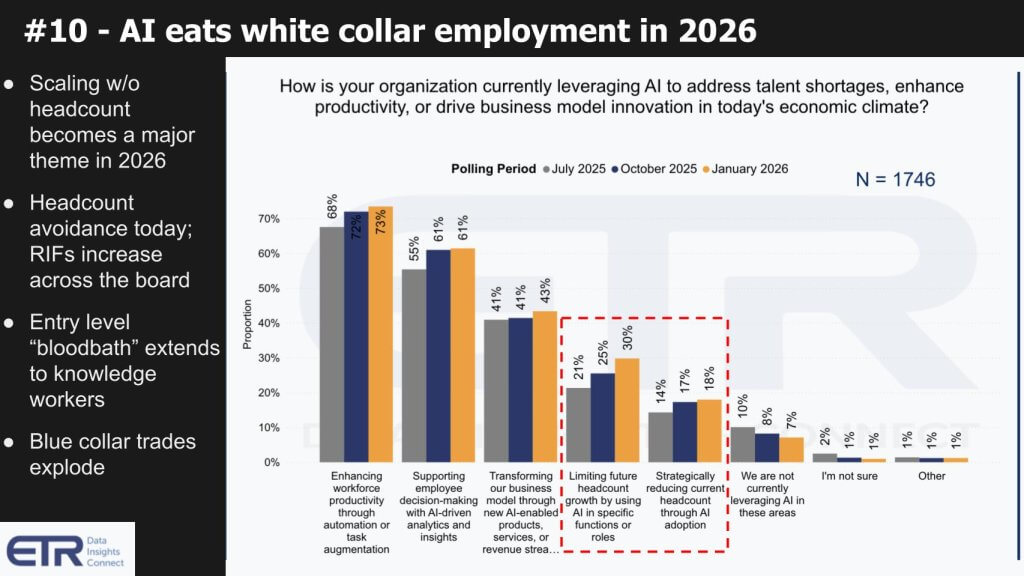
As AI systems become more self-governing, the question is no longer whether humans stay in the loop; it's how that loop is designed. In 2026, the most considerable changes will not have to do with task replacement, however about how obligation, authority, and accountability are dispersed in between people and machines. Traditional software application executes instructions.
Is Your Enterprise Be Powered By AI?
That habits starts to resemble a teammate more than a tool. In practice, this suggests humans are entrusting results, not tasks. An item operations group might appoint an AI system a goal such as improving feature adoption or lowering incident response time. The system assesses data, proposes actions, collaborates throughout tools, and reports progress, while humans retain authority over priorities and restraints.
One of the shifts in 2026 will be how employees perceive AI. Lots of groups are discovering that AI is most valuable when it soaks up the cognitive overhead that drains pipes time and focus.

Beyond development, AI is ending up being embedded in develop, test, and deployment pipelines. In 2026, numerous teams might rely on semi-autonomous systems to keep track of pipelines, find anomalies, and step in before failures escalate. An AI system keeping track of CI/CD workflows might see that a specific class of tests has started stopping working intermittently after recent merges.
This reduces feedback loops and reduces the cognitive load on teams managing intricate shipment environments. Possibly the most substantial shift is what occurs after code ships. Traditionally, deployed software stays static until people step in. AI-enabled systems are progressively embraced in place. Post-deployment, AI can keep track of use patterns, efficiency metrics, and mistake rates and then suggest setup changes, feature toggles, or refactors.
Building the Impactful AI Strategy for 2026
New Role of Automation On GCC Growth
As AI systems become more autonomous, the concern is no longer whether people remain in the loop; it's how that loop is designed. In 2026, the most considerable modifications will not be about task replacement, however about how obligation, authority, and responsibility are dispersed between individuals and devices. Traditional software carries out instructions.
An item operations group may appoint an AI system a goal such as improving feature adoption or reducing incident response time. The system assesses information, proposes actions, coordinates across tools, and reports development, while human beings retain authority over top priorities and restraints.
One of the shifts in 2026 will be how employees view AI. Many teams are discovering that AI is most important when it absorbs the cognitive overhead that drains time and focus.

Latest Posts
GCC Tech Innovation Trends
Key Strategies for Managing Applied AI Systems
Next-Gen Development Trends for 2026