All Categories
Featured
Table of Contents
As an outcome, success depends less on design elegance and more on systems engineering discipline. In making environments, physical AI is significantly used to discover problems mid-process utilizing vision systems connected straight into control software. Instead of flagging problems after examination, these systems adjust specifications in real time. What distinguishes today's physical AI deployments is not understanding, however closed-loop execution.
In logistics, AI and computer system vision systems keep track of inventory and traffic patterns to identify anomalies such as congestion, misplacements, or equipment problems. These systems either alert operators in real time with prioritized actions or feed decision recommendations into execution software application. Physical AI adoption in 2026 is pragmatic, not speculative. Business are prioritizing environments where results are quantifiable with well-understood restraints.
Its worth reveals up as minimized downtime, improved throughput, and safer operations, not in fancy user interfaces. While hardware frequently gets the attention, many failures in physical AI deployments trace back to software: poor information pipelines and combinations, or inadequate tracking. Effective groups treat physical AI as a dispersed software application system, one that must manage retries, degraded modes, versioning, and rollback much like cloud-native services.
Why Gen AI is No Longer Optional for GCC Finance Leaders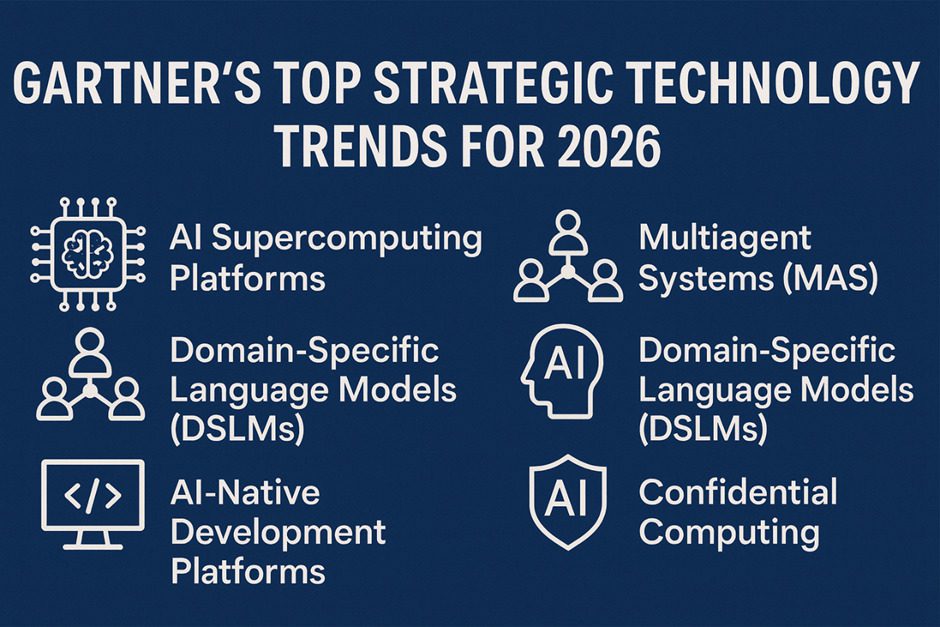
Structure physical AI systems requires fluency throughout embedded systems, information engineering, and real-time processing. For much of the generative AI boom, progress was measured by scale.
Why Integrated AI Drives High-Impact Innovation
By 2026, lots of companies running under strict compliance, privacy, and reliability requirements are moving away from one-size-fits-all designs in favor of domain-specific systems. This is where AI is customized to the language, workflows, and constraints of a particular market., "the competition won't be on the AI designs, however on the systems," suggesting that choosing the ideal model for a controlled usage case and integrating it into coordinated workflows will matter more than raw model scale.
General-purpose AI designs excel at breadth, but managed sectors frequently prioritize accuracy, traceability, and predictability over open-ended generation. Big models are more expensive to run, harder to audit, and more vulnerable to producing outputs that are hard to discuss after the fact. These end up being challenges that become severe in high-stakes environments such as financing, healthcare, and legal services.
In U.S. financial services, teams are progressively releasing designs trained on internal policy documents, deal histories, and regulative assistance. Rather than generating open-ended responses, these systems are optimized to flag risk, describe decisions, and produce pertinent precedents. The outcome isn't a more "innovative" AI, but a more dependable one.
New Role of AI On GCC Growth
These systems are designed to assist clinicians by narrowing alternatives, highlighting anomalies, and mentioning sources. The emphasis is on medical support and openness, constant with best practices outlined by companies like the American Medical Association and the FDA. In the legal area, AI systems should run within tight interpretive boundaries.
U.S. legal teams are for that reason adopting AI designs tuned to specific jurisdictions, case law databases, and internal agreement libraries, instead of counting on broad, general-purpose models. Instead of summing up "the law" broadly, these systems concentrate on extracting stipulations, comparing precedents, and determining inconsistencies, with clear traceability back to source material; a requirement highlighted in legal AI governance conversations and professional assistance.
One of the enablers of domain-specific AI is the growing usage of synthetic and structured data. In sectors where real data is limited, sensitive, or unevenly dispersed, synthetic generation helps fill spaces without breaching compliance requirements. In insurance coverage and risk modeling, artificial datasets are used to mimic rare events, such as extreme weather condition or fraud scenarios.
Implementing High-Impact AI Roadmaps for Modern Enterprises
Desire a much deeper dive into how artificial information improves AI workflows? The earliest wave of generative AI adoption was simple to recognize: draft an e-mail, sum up a document, produce marketing copy.
By 2026, that framing no longer holds. Generative AI is progressively embedded inside decision-making systems, where its function is not to produce outputs for human beings to examine but to shape options and suggest actions within defined constraints. The shift is subtle, however it alters how software application teams design workflows and how businesses measure effect.
Rather than issuing a final choice, the AI describes the rationale behind each choice, surface areas tradeoffs, and flags dangers. This allows people to intervene where necessary. In this design, generative AI functions as a thinking layer, not an authority. What differentiates these systems from earlier automation is their capability to factor in time.
The Role of Automation On Middle East Growth
In consumer operations, generative AI might evaluate support tickets, usage information, and churn indicators to recommend intervention strategies. If a recommended action doesn't produce the desired result, the system revises its technique.
The most efficient systems hide complexity behind familiar user interfaces, allowing groups to take advantage of AI without learning new interaction models. Within procurement or supply chain software, generative AI can continuously assess provider efficiency, contract terms, and need forecasts. When conditions alter, it proposes alternative sourcing strategies, drafts reasons aligned with policy, and paths decisions to the proper approvers.
Another shift underway is the move from rule-based personalization to generative systems that adjust dynamically. Rather of pre-defining every scenario, groups specify goals and restraints, and allow AI to customize actions appropriately. In digital item environments, generative AI can change onboarding circulations, function direct exposure, or assistance interventions based on user habits, while appreciating compliance standards.
This balance in between flexibility and control is what makes generative AI viable at scale. For decades, software application development has been specified by a familiar split: human beings design systems and write code; tools assist at the margins.
How Integrated AI Accelerates High-Impact Efficiency
By 2026, that boundary will vanish. AI is moving beyond line-by-line help and into system-level understanding. This is where it can reason throughout whole repositories, advancement histories, and implementation environments. The outcome is a shift from AI as a coding help to AI as an individual in the software lifecycle.
Modern codebases are sprawling, interconnected systems shaped by years of decisions, tradeoffs, and spots. Navigating that context has actually always been one of the hardest parts of engineering work. Instead of asking "what does this function do?", developers significantly ask AI systems concerns like: What will break if we refactor this module? Which services depend upon this API? Or why was this reasoning presented in the first place? AI responses by evaluating commit history, dependence graphs, test coverage, and paperwork.

Latest Posts
Recent GCC Tech Innovation Trends
The Best Workflow Tools Analyses in 2026
New Venture Updates From the GCC Startup Sector